Amazon. com Help Change Your Language & Marketplace in the Amazon Assistant
Amazon Assistant for Windows
Amazon Assistant Makes Shopping Simple
Amazon is an amazing shopping site. The majority of people will check there before buying any day to day household goods. However sometimes the site feels a bit tricky to search as it? s packed with random items. Amazon Assistant is a handy free browser plugin that make it easier and faster to shop and potentially save you money.
Get delivery notifications.
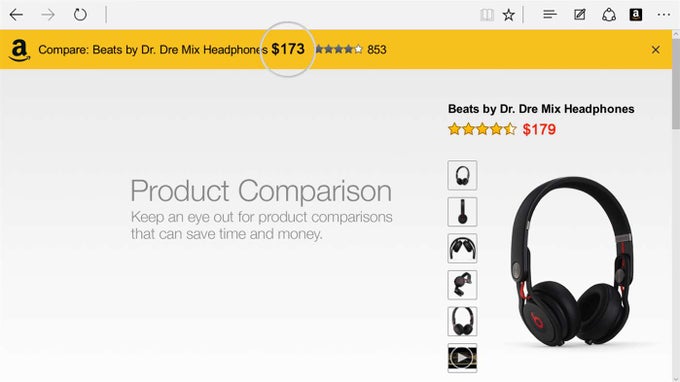
Compare products and prices.
Needs to be a little more streamlined.
You may also like
Amazon Alexa
Amazon Alexa for Windows 10
Windows 8 Upgrade Assistant
Make sure your PC is ready for Windows 8
Wish - Shopping Made Fun
Hottest Shopping Items Online
Content Manager Assistant
Backup and transfer files from your Vita
In Softonic we scan all the files hosted on our platform to assess and avoid any potential harm for your device. Our team performs checks each time a new file is uploaded and periodically reviews files to confirm or update their status. This comprehensive process allows us to set a status for any downloadable file as follows:
It’s extremely likely that this software program is clean.
What does this mean?
We have scanned the file and URLs associated with this software program in more than 50 of the world's leading antivirus services; no possible threat has been detected.
This software program is potentially malicious or may contain unwanted bundled software.
Why is the software program still available?
Based on our scan system, we have determined that these flags are possibly False positives.
What is a false positive?
It means a benign program is wrongfully flagged as malicious due to an overly broad detection signature or algorithm used in an antivirus program.
It’s highly probable this software program is malicious or contains unwanted bundled software.
Why is this software program no longer available in our Catalog?
Based on our scan system, we have determined that these flags are likely to be real positives.
We’d like to highlight that from time to time, we may miss a potentially malicious software program. To continue promising you a malware-free catalog of programs and apps, our team has integrated a Report Software feature in every catalog page that loops your feedback back to us.
Flag any particular issues you may encounter and Softonic will address those concerns as soon as possible.
Total downloads
Last month's downloads
Varies with device
Amazon. com
User rating
Embed this Program
Add this Program to your website by copying the code below.
Softonic review
Amazon is an amazing shopping site. The majority of people will check there before buying any day to day household goods. However sometimes the site feels a bit tricky to search as it? s packed with random items. Amazon Assistant is a handy free browser plugin that make it easier and faster to shop and potentially save you money.
Bring the Deals to You
The idea behind Amazon Assistant is to have it sitting in your browser unobtrusively ready to pop into action when you use Amazon. It? s literally a little assistant which (supposedly) streamlines the shopping process. The layout is pretty minimalist and fits Amazon? s themes well. One of the most useful features is Deal of the Day which displays the best deals to you so you never miss them. You can also get up to date notifications on your orders. Being a plugin it works with your browser so you can do things like instantly save an item from a non-Amazon site to your wish list.
Handy and Helpful
Amazon Assistant is useful for those who shop a lot and hate to miss out on a deal. It? s very good for quick product comparisons. The downside is that it? s a little clunky and makes you go to Amazon? s site to sign in. This software is made by Amazon and it? s free to use so it? s well worth a shot.
Buyer-Seller Messages FAQ
The Buyer-Seller Messages page facilitates communication between buyers and sellers in the Amazon store. It allows buyers and sellers to communicate with each other in ways that help protect the privacy of both parties, including assigning a unique, anonymized email alias to each buyer. Sellers can utilize the anonymized email alias the same way as a real email address. Furthermore, the anonymized email alias remains the same for all future contact with the same buyer. Buyers receive assigned a unique email alias for each seller relationship.
Contact Buyer page
Why did you change the Contact Buyer experience?
You can now use templates that have Amazon-supplied content so that you do not have to enter repetitive content. These templates bring consistency to the style and tone of messages buyers receive. Additionally, the text provided by Amazon will be automatically translated into the default language of your buyer’s marketplace.
Why are some contact reasons unavailable?
On the Contact Buyer page, contact reasons are available for you based on the order status and specific product categories. For example, if the order has not been completed yet, you'll see the option to contact the buyer to report an unexpected problem, but you won’t yet have the option to contact the buyer regarding a return.
Message delivery
Why did I receive a notification from Amazon that my message could not be delivered?
A buyer can opt out of receiving unsolicited messages from all sellers. This means that your email will be blocked, and you will receive a bounce back email with instructions for contacting the buyer in case of critical issues. This opt-out does not apply if the buyer messages you first, as long as you reply on the same message thread. If your response is blocked, please try responding to the buyer on the original message thread (instead of starting a new one), and make sure that their original message is included in your reply.
Can buyers opt out of messages from sellers?
Yes, Amazon allows buyers to opt out of receiving unsolicited messages from sellers. However, when buyers initiate contact with you, they cannot opt out of responses from you.
How do I send messages that are critical to completing the order if my message was blocked?
Amazon does not block messages if they are necessary for completing an order. If your message was blocked, it is either because the buyer opted out of non-critical messages from sellers, or Amazon treats the selected contact reason as one that is not critical for completing the order.
What kind of messages are critical to completing an order?
The following messages are cons >Product customization questions Delivery scheduling Issues with a shipping address.
The following messages are not critical to complete an order:
- Requests for seller feedback or buyer reviews Order, shipment, delivery, or refund confirmations. Amazon already sends these emails Proactive customer service, for example: product manuals, tips for using the product, answers to frequently asked questions, suggestions if something goes wrong Out-of-stock or delay notifications, or offers of alternative products (please cancel the order instead).
How do I block the bounce back message?
You can choose to stop receiving a bounce back message when buyers opt out of seller communications.
When a buyer contacts me, where is the message sent?
The email will be sent to the customer service email address you entered on your Account Info page.
How do I know whether Amazon has delivered my email to a buyer?
In Buyer-Seller Messaging, you can view communications that have been delivered to the buyer by clicking the Response Needed dropdown filter and selecting Sent messages instead.
I usually provide the buyer's email address to my delivery carrier to notify the order has shipped. Can I do this with the anonymized email alias?
No. You should use Amazon’s existing processes to confirm a shipment.
Managing messages
How do I find messages that I have not responded to?
By default, you will see messages requiring a response when you first navigate to the Buyer-Seller Messages page. You can change the filter by clicking on the Response Needed dropdown and selecting a different option.
I have an email message from a buyer that does not need a reply. How can I stop it from counting toward my response-time calculation?
To mark a message that does not require a response, click No Response Needed below the message on the Buyer-Seller Messages page. You can also click the Mark as no response needed link in the email you received. Either of these actions will exclude the message from response time calculations.
Can I continue to use my existing email client to manage my communication with the buyers?
Yes. You do not need to sign in to your seller account to communicate with a buyer.
Is there a limit to the number of messages I can send each day?
Yes. We use the following formula to set the maximum number of daily messages you may send: 5 times your average daily order volume, plus an additional 600 messages.
It is not necessary for you to send separate shipment notifications or tracking numbers using Buyer-Seller Messaging since Amazon sends those on your behalf when you confirm a shipment from the Manage Orders page.
Email address and features
How long is the email alias? What is the format?
The email alias is 35 characters including the domain. Here is an example: t969vz2jn3bdsy7@marketplace. amazon. com.
Does a buyer have the same email alias across multiple sellers?
No. Buyers are assigned a unique email alias for each seller relationship.
Are there separate email addresses per thread?
No. The anonymized email alias remains the same for all contacts that you have with each individual buyer. This way, you can use the buyer's anonymized email address as a unique identifier to follow conversations across multiple orders.
Is HTML email supported?
Yes, HTML email is supported between buyers and sellers.
Are email attachments supported?
You can send attachments to a buyer and receive attachments from buyers. See Send attachments to buyers.
Additional information
I received a buyer message without an order ID. How can I find the buyer's order information?
When the buyer initiates contact from outside the order page, the message may not include an order ID. You can find a buyer's order ID by searching for the anonymized email alias in Manage Orders. Their email alias is included in the From field of the message you received.
Why does Amazon retain a record of buyer-seller contacts sent through Amazon?
By maintaining a record of contacts between buyers and sellers, we can arbitrate disputes faster by ensuring that the Amazon Dispute Resolution Team has access to all buyer-seller communications when reviewing A-to-z Guarantee claims and chargebacks.
As a seller, can I contact other sellers?
No. As a seller, you should not contact another seller using the "Ask a question" feature on the seller’s storefront page. If you need to report copyright, trademark, or patent infringement, see the Report Infringement page.
How do I report a message from buyer?
To report a message, click the Report Message button on your Buyer-Seller Messages page, the Seller App, or the email you receive. Then select the appropriate reason for reporting and click the Report Message button that is displayed at the bottom of the message to submit the report.
Use the Report Message button to report any suspicious activity to Amazon, such as messages you think are spam. While we cannot investigate every reported message, we analyze this data to identify patterns of suspicious activity and prevent such abuse in future. Once a message is reported, you are not required to respond to the message or mark it as No response needed. There is no need to remove a reported message from your inbox.
How do buyers distinguish between messages sent by sellers from other email sent by Amazon?
Your messages to a buyer will have your business name in the From field instead of displaying Amazon in a buyer’s email inbox. Once the buyer opens your message, we state your business name in the message’s body text.
Amazon. com Help: Change Your Language & Marketplace in the Amazon Assistant

There's a problem loading this menu right now.
Amazon Assistant helps you discover Amazon products and compare prices as you shop across the web.
Personalized RecommendationsClick on the icon in your browser to find your product recommendations personalized for you.
Why Tech Giants Are So Desperate to Prov >
Why are the top tech companies in the world spending billions of dollars investing in voice assistants and smart speakers that lose them money every quarter? Amazon reportedly has 10,000 employees working on Alexa. Tear-down analyses suggest that Google Home Mini is sold at a loss every time it is discounted, which is frequently. Samsung has introduced a dedicated button on its phones for Bixby which consumers regularly remap to use Google Assistant instead. Microsoft is no longer trying to compete with Alexa or Google Assistant, but is still investing in Cortana.
Each of these companies, and others, have different reasons for their continued investment. Some are attempting to protect a dominant franchise, such as online commerce in Amazon’s case, and search advertising for Google. Others are trying to break into spaces where they have been excluded, such as digital content distribution, display advertising, search, and commerce. A couple have both scenarios in mind.
You can only understand the voice platform wars by first recognizing that voice assistants, specifically, represent both a platform and user interface (UI) shift comparable to the web and smartphones. The key difference is that these new platforms are neither based on open standards, nor on relatively open access to consumers. Voice assistants introduce a proprietary intermediary into all digital consumer interactions. This scenario both excites and frightens the leading tech companies that carved out enviable positions in the earlier web and smartphone platform wars.
Platform and UI Shifts Go Hand-in-Hand
Voice assistants represent the third key UI and technology platform shift of the past three decades, following the web in the 1990’s and smartphones about 10 years ago. Each successive UI shift changed the way humans interacted with and accessed digital content. Web pages gave us “click,” where we surfed using our mouse and activated buttons and hyperlinks. Smartphones introduced “touch,” “swipe,” and “pinch” to billions of consumers and replaced web pages with apps. Both of these transitions required consumers to learn a new language for interacting with technology. The shift to voice doesn’t require any training. Users simply “speak” as they do naturally.
Each of these UI changes was accompanied by a new technology platform. The World Wide Web was built on the back of the internet, and PC proliferation enabled web pages to be easily accessed. Smartphone mobile operating systems such as iOS and Android were important developments, but the app economy also relied on the introduction of cloud computing for efficiently delivering content along with regular feature updates and performance enhancements. Voice computing relies on artificial intelligence for speech recognition and natural language understanding. It is also being used to dynamically improve user experience.
Platform Shifts, Market Share Dominance, and the Five A’s
The web and mobile introduced entirely new ways to conduct business, and enhanced the efficiency of old methods. Specific companies came to dominate in different areas. Voicebot subsequently introduced the 5 A’s framework for evaluating value segment dominance: Access, Acquisition, Authority, Attention, and Agency.
The first of these, Access, can be thought of as distribution for digital content. You may recall the mantra popularized by Bill Gates that “content is king” on the internet. No single company came to dominate all content on the web largely because content ownership is distributed widely, content formats are varied, and the open standards of the internet enable anyone to become a publisher. However, YouTube did come to dominate user-generated video, and more recently, Netflix has established unrivaled market share in professional video. To a lesser extent, Spotify has had success dominating the music space. Each followed a similar strategy of a two-sided marketplace bringing together the largest number of suppliers and consumers.
YouTube started on the web and successfully made the transition to mobile. Netflix and Spotify both required additional innovations around ubiquitous broadband and WiFi to make these same transitions. So, this segment has evolved with the platforms.
Acquisition is the second “A.” When you think about online shopping, there is little argument that Amazon came to dominate this sphere in the U. S. and in many western nations. In China, Alibaba and its assorted properties holds this title, but we can point to these two clear winners despite the fact than many companies also sell online, some exclusively. Amazon and Alibaba also followed the marketplace model of aggregating supply and demand.
Authority is a soft asset, but a powerful one. Google came to dominate authority in both the web and mobile eras by becoming the dominant search engine. If you wanted to answer a question, you would “Google” it. At one time, The Encyclopedia Britannica, Walter Cronkite, or The New York Times might have been the leading authority of their day. The digital era gave us Google, with more than 90% share of all search traffic.
Each of these first three segments is about asserting control in the market over content distribution, commerce, and information. The next A is about controlling how people use their time. Attention used to be something the top television show, news broadcast, or most popular newspapers could claim as an asset. Consumers would tune in or read their content, and that offered an opportunity to advertise. It is easy to conclude that Apple and Google, with their dominant mobile operating systems, along with Apple again and Samsung as the world’s leading smartphone makers, were the winners of the mobile era. However, another winner was assuredly Facebook. Its properties came to command more user attention than any other company by a large margin.
Playing Defense Against a New Intermediary
Each of these segments is again up for grabs in the new voice era. Voice assistants offer easy Access to content. They are being used to Acquire goods, and are a new source of Authority, as they answer billions of questions annually. They are also diverting Attention that previously went to smartphone interactions to new voice interaction properties.
This means that each of the winners of the previous web and mobile platform wars has existing territory they must protect. Will voice interactive video where users can control playback and even choose the content sequence eventually displace passive video consumption on YouTube? Will a voice assistant from Google or Apple funnel user purchases through Amazon. com fulfillment, or will they instead go direct to online sellers? Will voice assistants from Amazon, Apple, Microsoft, and Samsung solely consult the Google Knowledge Graph to answer questions? How will consumer habits and voice assistant biases steer consumer attention away from Facebook, Instagram, and WhatsApp into other diversions?
The change introduced by voice is even more disruptive than the shift from web to mobile. That transition involved users diverting their time to a new technology channel which also had access to the previous channel through mobile web. Much of the content on the web and mobile is completely inaccessible through voice assistants. In addition, activities on web and mobile platforms were user-directed. The consumer made choices. Increasingly, voice assistants make choices for consumers. That is where the fifth “A” comes into play.
Agency is what all of the big winners of the earlier tech platforms fear most. Voice assistants reserve agency for making choices about where answers are sourced (Authority), and can heavily influence content sourcing (Access), such as steering people toward Prime Video or YouTube. They also can order from multiple sources (Acquisition) that are not Amazon. com. And, they introduce new sources of interactions that displace consumer time with media (Attention).
Voice assistants are an intermediary. The web has no equivalent structural intermediary, and mobile app stores place limited constraints based on app certification, but don’t overtly steer consumers to a particular source. Voice assistants do overtly steer users, presenting the “best result” for any given request. Users can ask for results from specific sources, but that takes extra effort and forethought, and the voice assistant may not ultimately make that content available. For example, there is no Amazon. com shopping through Google Assistant, and Alexa will favor results from Prime Video over other services.
Steering and availability are clear issues that can undermine the position of a winner of an earlier tech platform, but agency will have far greater implications. Voice assistants are designed to help simplify users’ lives. Over time, more and more agency will be granted to voice assistants to simply execute tasks on behalf of the user. The consumer will not necessarily care how the task is fulfilled, just that it gets done. Some of this will be user-directed, such as Google Duplex making a restaurant reservation. Some of it will be proactive, as a voice assistant will notice a favorite item that the user regularly purchases is available on discount and it will simply be ordered and shipped without any explicit instruction.
The leading technology giants of our era must play defense against voice assistants provided by other organizations in order to protect their hard-won gains in web and mobile. Failure to protect their franchise could lead to a swift demise.
Playing Offense by Controlling the Agent
If an agent is making decisions on behalf of a consumer, you can understand why all of the tech giants want to be the provider of that assistant. Google can ensure that Google Assistant users are steered to its search and YouTube video services while also making a dent in online shopping. Amazon can expand beyond commerce into search and attention while accelerating the adoption of its digital content properties. Samsung could get beyond its global lead in smartphone sales to include voice-enabled online services.
Platform shifts represent opportunities for new players to create their own segment dominance. Apple and Samsung took advantage of the shift to smartphones to create seemingly unassailable franchises at the expense of Nokia and Blackberry. Facebook established the always-available Attention segment that didn’t exist before we had compact, connected computers with high bandwidth digital access with us all of the time.
Voice Assistants Have No Boundaries
Voice assistants are not constrained to a device, and that makes them more powerful due to their ubiquity. The web was originally tethered to your PC. Smartphones are mobile, but become a single, personalized source of information, connectivity, and amusement. Voice assistants are often most recognizable through smart speakers, but in fact are on at least ten times more smartphones and are rapidly expanding into appliances and a variety of other voice access points, such as digital media players, refrigerators, and smart watches.
This lack of a device boundary means that voice assistants can spread more easily, can provide different types of value than the previous platforms, and can offer an entry point for new providers that don’t have assets from the previous eras. The biggest tech companies in the world recognize this because they exploited the changes brought about by previous platform shifts. They are also highly attuned to their current competitive advantages and those of their rivals, and see voice as an opportunity to both shore up their defenses while potentially gaining new, lucrative ground.


Комментариев нет